
SpeakEasy: Home Speech Therapy
SpeakEasy CommunityParenting
3.6161.00 Reviews
- Version
- Varies With Device
- Installs
- 100.00K
- Age Rating
- Everyone
Screenshots
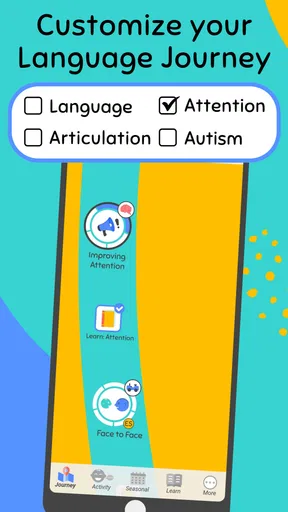
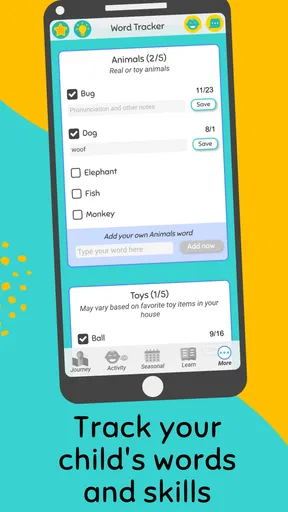

Our Review of SpeakEasy: Home Speech Therapy
 Analysis by Appyee
When a child is struggling to communicate, practice can easily become stressful for everyone involved. SpeakEasy: Home Speech Therapy takes a home-based approach to early language development, giving parents a way to introduce speech activities outside a clinic appointment. I found its biggest value in making practice feel more manageable: instead of waiting for a formal session, a parent can build small language moments into an ordinary day.
This is a free parenting app from SpeakEasy Community, aimed at Everyone and available for devices running Android 9 or later. It has passed the hundred-thousand-install mark and holds a 3.6 average from over 600 ratings, so it has attracted a meaningful audience while also leaving room for mixed experiences. My overall impression is that it works best as a practical companion for families who want structure and repetition, not as a replacement for an assessment or individualized speech-language therapy.
How SpeakEasy feels to use at home
I see home practice as most useful when it gives a parent a clear starting point without turning the day into a series of lessons. In this section, I’ll focus on how to keep activities manageable and connected to familiar routines, so the app supports interaction rather than taking it over. That distinction matters even more when a child’s energy, attention, or comfort changes from one day to the next.
Readable enough for shared parent-and-child use
The most important design question here is not whether a child can operate every part independently. In real homes, a parent will often open the app, choose an activity, and guide the child through it. That makes clear navigation and quick orientation more important than a complicated collection of professional tools. SpeakEasy is most useful when the adult treats it as a shared activity rather than handing over a phone and expecting the child to work alone.
I would approach the app in short visits first. Open it when both of you have time, look through the available material, and decide what fits your child’s current ability. That small preparation step matters because speech practice can lose its benefit when the adult is searching through screens while the child waits. A predictable routine also helps children who become uncomfortable with sudden changes or unfamiliar instructions.
For parents, the practical advantage is the app’s narrow purpose. It is not trying to be a general entertainment platform, a school planner, and a medical record at the same time. The focus stays on early language development. That makes it easier to connect an activity with a real goal, such as encouraging a child to name an object, imitate a sound, or take a turn in a simple exchange.
Still, parents should not assume that a speech app automatically explains why a child is finding communication difficult. A child may have trouble with understanding, speech sounds, attention, hearing, motor planning, or social interaction, and those needs can look very different. I see SpeakEasy as a source of guided practice, while a qualified professional remains the better person to interpret progress and decide what should come next.
Useful in small, repeatable routines
One of my favorite ways to use this kind of tool is to attach it to a routine that already exists. A few minutes after breakfast, before a nap, or during a quiet afternoon can work better than announcing a formal “lesson.” If your child is tired or hungry, the same activity may feel like pressure instead of play. The app is more likely to help when the adult watches the child’s energy and stops before frustration takes over.
A realistic example would be a parent preparing for the day while a child sits nearby. Rather than trying to complete a long session, the parent chooses one small target, models it naturally, and then uses the same word during dressing, snack time, or tidying up. This turns the app into a prompt for communication throughout the day. The strongest result may not be finishing an activity; it may be noticing that the child uses a sound, gesture, or word later without being prompted.
The best workflow is brief practice followed by real conversation. I would avoid treating repeated taps or correct responses as the only measure of success. If the child points, looks toward a person, takes a turn, or finds another way to communicate, that is meaningful information to notice and share with a therapist or caregiver.
Motor and sensory needs deserve active supervision
A phone or tablet can create physical demands that are easy to overlook. Tapping, holding a device, shifting attention between an image and an adult, and responding at the right moment may all be difficult for a child with motor or coordination challenges. SpeakEasy may still be useful in those situations, but the adult should be ready to adapt the activity rather than insisting on independent control.
For example, a parent can position the device securely, keep it within comfortable reach, and allow extra time for a response. If touching the screen is tiring or inaccurate, the adult can model the action and let the child concentrate on listening, looking, vocalizing, pointing, or choosing in another way. This is not a special setting I would assume the app provides; it is a practical way to make shared use less demanding.
Sensory comfort matters just as much. Some children respond poorly to bright screens, rapid changes, sound, or the general intensity of digital activities. I would begin with the device volume low, the room calm, and the screen at a comfortable distance. Watch for signs such as turning away, covering the ears, becoming unusually restless, or losing interest. Those reactions are a reason to pause, not a reason to push harder.
Parents should also remember that a digital prompt can compete with face-to-face interaction. If the child spends the entire time watching the screen, the activity may not be supporting the kind of social exchange the family wants to encourage. I would use the display briefly, then look up, repeat the target in a natural voice, and give the child a chance to respond without the device in front of them.
Different communication styles can fit the same moment
Early language development does not always appear as clear spoken words. Some children communicate through gestures, eye gaze, sounds, facial expressions, signs, or a mixture of these. SpeakEasy makes the most sense when parents use its speech-focused material as one part of a wider communication approach rather than judging every attempt against spoken language alone.
If a child does not imitate a sound, I would not immediately label the attempt a failure. The child might be showing understanding in another way, or might need a simpler model, more time, or a different sensory experience. A parent can acknowledge the response, repeat the word naturally, and move on. That keeps practice encouraging while still giving the adult useful observations about what the child can do.
This is also where professional guidance becomes especially valuable. A speech-language pathologist can help a family decide whether the app’s activities suit the child’s communication profile and how to include alternative ways of expressing needs. Families should seek individualized advice when there are concerns about regression, hearing, swallowing, significant frustration, or a child’s broader development.
Access across everyday situations
The home setting is the app’s natural strength. A parent can use it in a familiar room, at a time chosen around the child’s schedule, and without the travel involved in an appointment. That flexibility may help families who live far from services, have unpredictable work hours, or want extra practice between professional sessions.
At the same time, “home use” does not mean every family has equal access. A child may share a device with siblings, a parent may have limited uninterrupted time, or internet and battery availability may affect when digital practice is realistic. I would not build the household’s entire speech routine around the app. Keep a simple offline backup, such as a few familiar objects, picture books, or daily routines that encourage the same communication goal.
The app can also fit into a caregiver handoff. If one adult begins an activity, they can briefly explain what the child responded to and what seemed difficult before another adult takes over. That is more useful than simply saying the child “did well” or “did not cooperate.” Note the situation: whether the child was tired, what prompt was used, and whether the response was spoken, gestured, or otherwise communicated.
For families using more than one language, I would be careful about treating the app as a complete language plan. Children may understand or express themselves differently across languages, and a parent should not assume that slower performance in one language represents a general delay. Use the language that supports warm, natural interaction at home, and ask a qualified professional how the activities should be adapted for a multilingual child.
Where the experience can become frustrating
The main limitation is the gap between a general home tool and a child’s individual needs. A parent may want detailed feedback, a tailored sequence, or a clear explanation of why a particular exercise was selected. An app can offer convenient practice, but it cannot observe the full child in the way a clinician can: how they communicate during play, how they respond to people, or how skills carry over into daily life.
There is also a financial consideration beyond the free download. In-app purchases range from $11.99 to $71.94 per item. That makes it important to understand what is available without payment and whether any paid material fits your family’s goals before committing. I would avoid purchasing simply because a child is struggling; first decide what specific problem the material is meant to address and whether a professional has recommended that kind of practice.
The 3.6 average suggests that the experience will not suit everyone equally. I would interpret that as a reason to test the routine carefully rather than as a simple pass-or-fail judgment. A child who enjoys brief, guided practice may benefit, while a child who becomes distressed by screens or needs highly individualized intervention may do better with direct professional support, printed activities, play-based interaction, or another communication approach.
Another possible barrier is adult consistency. The app cannot create a routine on its own. If a parent opens it only during moments of crisis, the child may associate it with pressure. If the adult changes targets constantly, it becomes difficult to tell what is helping. I recommend choosing one small communication aim, practicing it in several ordinary contexts, and reviewing observations after a week or two rather than chasing immediate results.
Who should try it, and who should look elsewhere
I would recommend SpeakEasy to a parent who wants a gentle starting point for home practice, especially when the child can participate comfortably with an adult nearby. It may also suit families already working with a therapist who want another way to repeat selected language activities between appointments. Its free entry point makes it reasonable to explore before deciding whether the format fits your household.
I would be more cautious if you are looking for diagnosis, emergency advice, progress measurement, or a substitute for therapy. The app is not the right sole resource for a child whose communication has suddenly worsened, whose needs are complex, or whose difficulties involve concerns outside early speech and language practice. In those cases, direct assessment should come first.
It may also be a poor match for a child who cannot comfortably tolerate screen-based activities. A picture book, object-based play, songs without a device, or guided interaction with a clinician may offer better engagement. Likewise, if your child communicates effectively through gestures or an alternative system, do not narrow success to spoken imitation just because the app’s central purpose involves speech.
My inclusive verdict
SpeakEasy: Home Speech Therapy is a useful, approachable parenting app when it is treated as a prompt for shared communication rather than an automated treatment plan. I appreciate the possibility of practicing at home, repeating a small goal, and carrying that goal into meals, play, dressing, and other familiar moments. Those everyday connections are where a digital activity can become genuinely valuable.
Its inclusive potential depends heavily on the adult’s flexibility. Give the child time, accept communication in more than one form, reduce sensory and motor demands when needed, and stop when the activity is no longer productive. The app itself should not be expected to solve every access problem, and families should not feel that a child has failed because a screen-based exercise was a poor fit.
With a free download, an Everyone age rating, and support from SpeakEasy Community, it is a reasonable option to investigate for early language practice. Just keep expectations realistic, check the purchase choices carefully, and use professional advice when the child’s needs go beyond general home activities. In my view, its real strength is helping a parent turn speech practice into a short, repeatable part of family life; its real weakness is that no general app can provide the personal interpretation and adaptability of a skilled clinician.
Verdict
Strengths of SpeakEasy: Home Speech Therapy
- Clear, guided exercises for practicing speech at home.
- Useful for maintaining regular therapy between professional sessions.
- Simple interface makes activities easy to follow.
- Progress tracking can help users stay motivated.
- Convenient option for flexible, at-home practice.
Limitations of SpeakEasy: Home Speech Therapy
- It cannot replace assessment or treatment from a licensed speech therapist.
- Some exercises may feel repetitive after extended use.
- Results depend heavily on consistent, correct practice.
- Content may not suit every speech or language disorder.
- Certain features or exercises may require a paid subscription.
Other Releases by SpeakEasy Community
View All
Autism Speech and Language
Parenting3.8

Playful Eats: Fix Picky Eating
Parenting4.4
Similar Picks in This Category
View All
Family Space
Motorola Mobility LLC.3.9

شرطة الأطفال - مكالمة وهمية
Oub Apps4.1

Findmykids: Parental Control
LETEM LTD4.6

Pregnancy + | Tracker App
Philips Electronics UK Limited4.8

Policía de niños - para padres
Kids police4.7

Pregnancy App
Amila4.9
Frequently Asked Questions
What is SpeakEasy: Home Speech Therapy, and who is it designed for?
SpeakEasy: Home Speech Therapy is a mobile app that provides guided speech and language practice at home. It is mainly designed for children who need support with pronunciation, vocabulary, articulation, or early communication skills, while giving parents structured activities to follow. The app may also be useful as a supplement to professional therapy, but it should not be considered a replacement for an assessment or treatment plan from a qualified speech-language pathologist.
What types of speech and language activities are available in SpeakEasy?
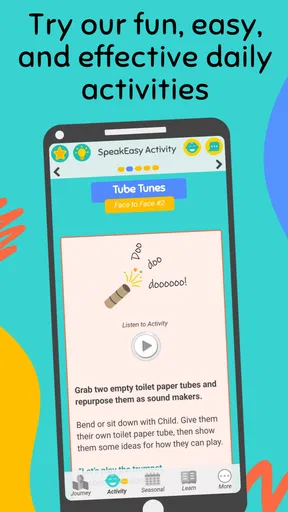
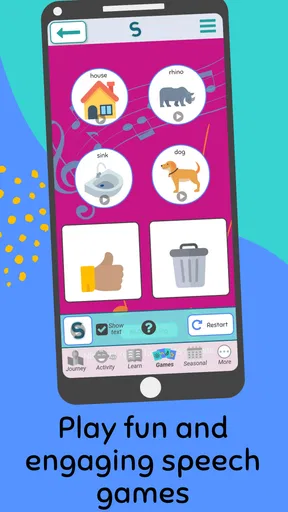
The app generally focuses on short, repeatable exercises that encourage children to listen, identify sounds or words, practice pronunciation, and build vocabulary through interactive activities. Depending on the child’s needs and the available program content, parents may find practice related to articulation, language development, and everyday communication. The experience is intended to be engaging and manageable, although the most suitable activities can vary considerably from one child to another.
Can parents use SpeakEasy without previous speech therapy experience?
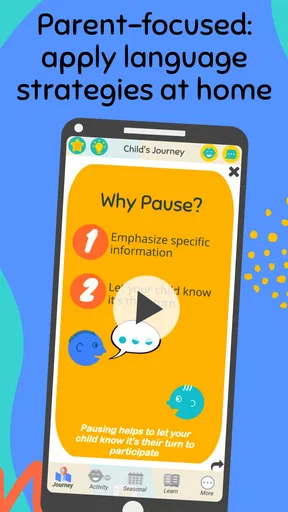
Yes, the app is designed to be approachable for parents and caregivers who want to practice with their child at home. Its guided format can make it easier to understand what to do during a session and how to encourage participation. However, parents should still monitor how their child responds, avoid forcing difficult exercises, and seek professional advice when concerns are significant, persistent, or related to hearing, developmental delays, or broader communication difficulties.
Is SpeakEasy: Home Speech Therapy a substitute for a speech-language therapist?
No. SpeakEasy can be a convenient home-practice tool, but it cannot provide the individualized diagnosis, clinical observation, and personal treatment adjustments offered by a licensed speech-language therapist. Children develop at different rates, and some speech difficulties may have underlying causes that an app cannot identify. For the best results, families should use the app as a complement to professional guidance whenever therapy has been recommended or concerns continue.
Is SpeakEasy free to download, and are there in-app purchases?
The app’s download availability, included exercises, and pricing can depend on the device platform, region, and current version. Some features or structured programs may require a subscription or in-app purchase after installation, so it is important to review the listing and payment details before starting a trial. Parents should also check renewal terms, cancellation instructions, and whether the app offers enough accessible content for their child’s specific practice needs.
